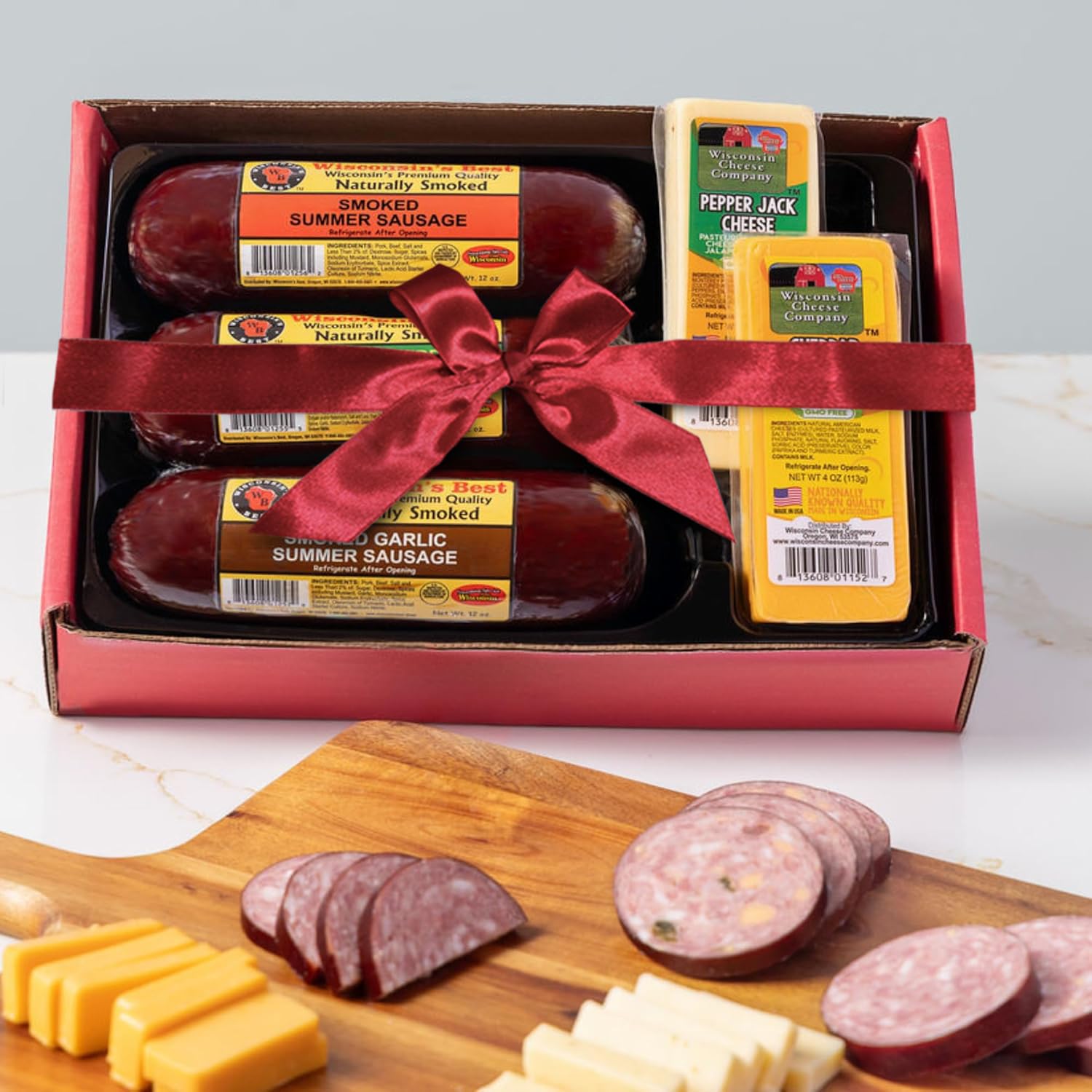
You don’t need to spend $80 on a cheese gift box to make your gathering feel special — but you do need to buy the right size, or you’ll either run out embarrassingly fast or end up eating cheddar for two weeks straight. Wisconsin cheese gift boxes — curated assortments of aged, artisan, or flavored cheeses produced in Wisconsin, often packaged alongside crackers, sausage, or preserves — have become a reliable go-to for birthdays, holiday gifts, office appreciation events, and tasting nights. According to the Wisconsin Milk Marketing Board’s Wisconsin Cheese Facts 2024, the state produces roughly 3.5 billion pounds of cheese annually, making it the largest cheese-producing state in the country. That’s why so many premium mail-order boxes lean on Wisconsin as their anchor origin. This guide is built for the buyer who already knows the landscape and is now trying to match box weight and variety count to a specific headcount, budget, or occasion. We’ll name the tradeoffs, show the math, and close with a clear decision rule and tier-by-tier comparison.
| EDITOR'S PICK[Wisconsin Cheese Company - Part…](https://www.amazon.com/dp/B00MDY23JW?tag=greenflower20-20) | Mid-tier[Wisconsin Cheese Company - Ulti…](https://www.amazon.com/dp/B01KF7KFUW?tag=greenflower20-20) | Budget pick[Wisconsin Cheese Company - Clas…](https://www.amazon.com/dp/B0994V3KXV?tag=greenflower20-20) | |
|---|---|---|---|
| Mustard inc. | ✓ | ✓ | ✗ |
| Cheese types | — | — | Cheddar & Pepper Jack |
| Sausage types | Smoked Summer Sausages | Smoked Summer Sausages | — |
| Price | $74.99 | $74.99 | $49.99 |
| See on Amazon → | See on Amazon → | See on Amazon → |
The Size Spectrum: What the Labels Actually Mean
Cheese gift box sizing is not standardized. A “small” box from one producer might be 12 oz of total product; a “small” from another is 2 lbs. Before anything else, translate marketing language into actual product weight and item count. Here’s how the tiers shake out across the Wisconsin specialty-cheese market as of mid-2026:
| Size Label (typical) | Total product weight | Variety count | Retail range | Feeds (snack portion) |
|---|---|---|---|---|
| Sampler / Small | 10–16 oz | 2–4 items | $25–$40 | 2–4 people |
| Medium | 1.5–2.5 lbs | 4–7 items | $45–$70 | 4–8 people |
| Large / Deluxe | 3–5 lbs | 7–12 items | $75–$130 | 8–16 people |
| Grand / Party | 5+ lbs | 10–20 items | $130–$220+ | 16–30 people |
The Spruce Eats, in their guide “How Much Cheese Per Person for a Party,” pegs a snack-only serving at roughly 1.5–2 oz of cheese per person, and a full charcuterie-style board at 3–4 oz. Those numbers matter because they directly expose where most buyers get tripped up: they buy a “medium” box thinking it’ll anchor a party of ten, and it simply doesn’t stretch that far once people start loading crackers.
The Three Real Tradeoffs You’re Actually Deciding Between
1. Variety vs. Volume
Most buyers instinctively reach for the box with the most variety. That’s often the wrong call for larger groups. A 2-lb box with six different cheeses sounds impressive, but each variety lands at roughly 5 oz — about three or four cracker servings per type. For a party of eight, that’s a single cracker each before a variety disappears.
Food & Wine, in their roundup “The Best Cheese Gift Boxes to Send This Year,” notes that the boxes recommended for gatherings over six people are almost always weighted toward volume in one or two anchor cheeses — typically an aged cheddar and a smoky gouda — rather than maximum variety. Variety counts above six or seven items in a single box are better suited to solo tasting experiences or couple’s gifts where the goal is exploration, not satiation.
Decision frame: If the box is the centerpiece of eating (not just a conversation piece alongside a full dinner), prioritize pounds over item count. If it’s a tasting experience — a gift for one household to explore over a week — variety wins.
2. Accompaniments Count Toward the Total Weight, Not the Cheese Weight
This is the most common source of buyer disappointment in aggregated reviews. When a Wisconsin cheese gift box lists “2.5 lbs of premium product,” that 2.5 lbs almost always includes the crackers, the mustard packet, the summer sausage, and the jam. The actual cheese component might be 14–18 oz in a box marketed as “medium.”
Tasting Table, in their overview “Best Cheese Subscriptions and Gift Boxes,” calls this out explicitly: buyers who want cheese-forward boxes need to either read the itemized product list carefully or look for sellers who specify cheese weight separately from accompaniments. Brands that itemize cheese weight per variety are transparent by design — treat that transparency as a positive signal.
Decision frame: If you’re feeding cheese-lovers who want cheese, check whether the listing breaks out cheese weight from accessories. If it doesn’t, assume 50–60% of the listed weight is non-cheese product.
3. Aging Profile Affects Shelf Life — and Therefore Gift Timing
Wisconsin specialty producers lean heavily on aged cheddars (typically aged 1–5 years), smoked goudas, and flavored varieties (horseradish, cranberry, jalapeño). Aged, lower-moisture cheeses have far longer shelf lives than fresh or semi-soft varieties. This matters for two buyer scenarios:
- Gift-givers shipping ahead of an event: Aged cheddar and smoked gouda hold well — typically 6–8 weeks refrigerated after delivery, per most producer guidance. Fresh curds, brie-style, or washed-rind cheeses need to be consumed within days.
- Office pantry buyers ordering in bulk: Stick exclusively to aged hard cheeses if the box will sit in a conference room fridge for more than a week. Semi-soft or bloomy-rind cheeses in a shared fridge are a liability.
Serious Eats, in their guide “How to Build a Cheese Board,” reinforces this point from a flavor angle: a board anchored in aged and smoked cheeses benefits from being allowed to come to room temperature for 30–45 minutes before serving, which means even a box that’s been shipped a few days prior can present beautifully if given that rest time.
Tier-by-Tier Comparison: Matching Box Size to Your Actual Scenario
Rather than reviewing individual brands — which change their configurations seasonally — this section maps each size tier to the scenarios buyers actually face, with clear criteria for what to look for and what to avoid at each level.
The Two-Person or Solo Gift: Sampler Tier
Best for: A couple’s tasting night, a housewarming token, a birthday gift for a single household.
A sampler box — 10 to 16 oz, three to four cheeses — is a tasting experience, not a feeding experience. The goal is for a couple or solo recipient to open the box over a quiet evening and try things they wouldn’t normally buy. Tasting Table’s gift-box roundup consistently highlights that well-curated sampler boxes at this tier include a mix of an aged sharp cheddar, a flavored variety, and sometimes a small summer sausage link.
What to look for: Itemized variety names (not just “assorted Wisconsin cheeses”), a real cheese producer’s name on the label rather than a generic gift company, and refrigerated shipping confirmation. Boxes in the $25–$40 range that list a named Wisconsin creamery as the source are almost always a stronger buy than anonymous “gourmet” packaging at the same price.
Red flag at this tier: “Up to X varieties” language means the contents vary by availability, and the box you receive may not match the product photo.
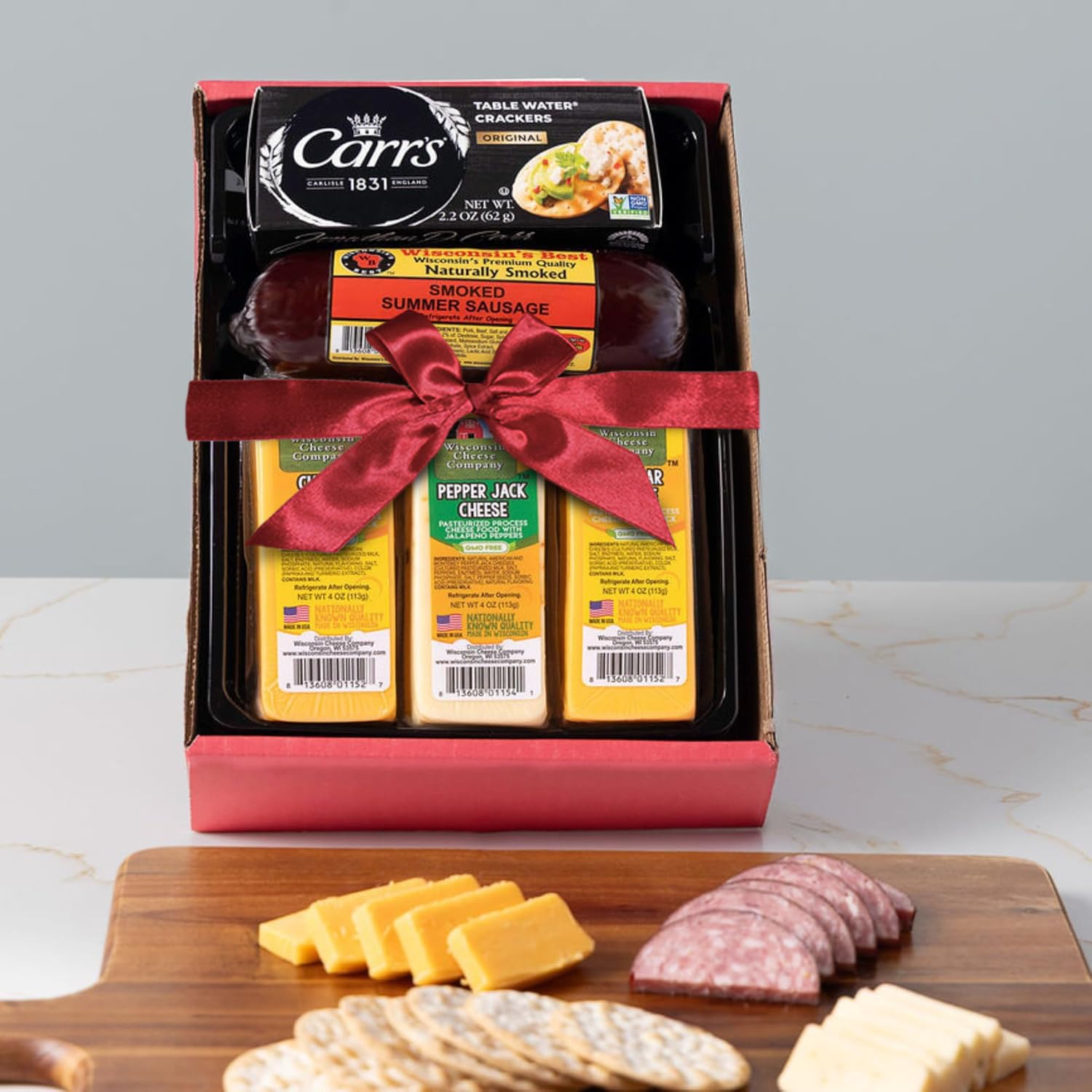
Wisconsin
$49.99
In stock on Amazon
Check price on AmazonThe Small Gathering or Tasting Night: Medium-to-Large Tier
Best for: Four to eight people where the cheese board is the main event, not a side.
For this scenario, you need a minimum of 2 lbs of actual cheese — which typically means buying a box labeled “large” or “deluxe” in the 3–4 lb total-weight range. At this price point ($65–$85), many Wisconsin-origin gift sets include a full-size wax-coated wheel or block — often a 1-lb aged cheddar — alongside three or four supporting varieties. That anchor block is what makes the board feel generous rather than precious.
The math check: A $70 box divided by 2 lbs of cheese works out to $35 per pound. Compare that to buying direct from a Wisconsin creamery’s website, where aged cheddar typically runs $18–$24 per pound in 2026 pricing. You’re paying a 40–70% premium for curation, packaging, and shipping — reasonable for a gift, but worth knowing if you’re assembling your own board for a home event rather than sending something to someone else.
The Spruce Eats’ party-portioning guidance is the right reference here: at 3 oz per person for a board-as-main-event, a party of eight needs 24 oz of cheese minimum, and ideally closer to 32 oz to feel unhurried. That’s why the “medium” tier almost always undershoots this scenario.
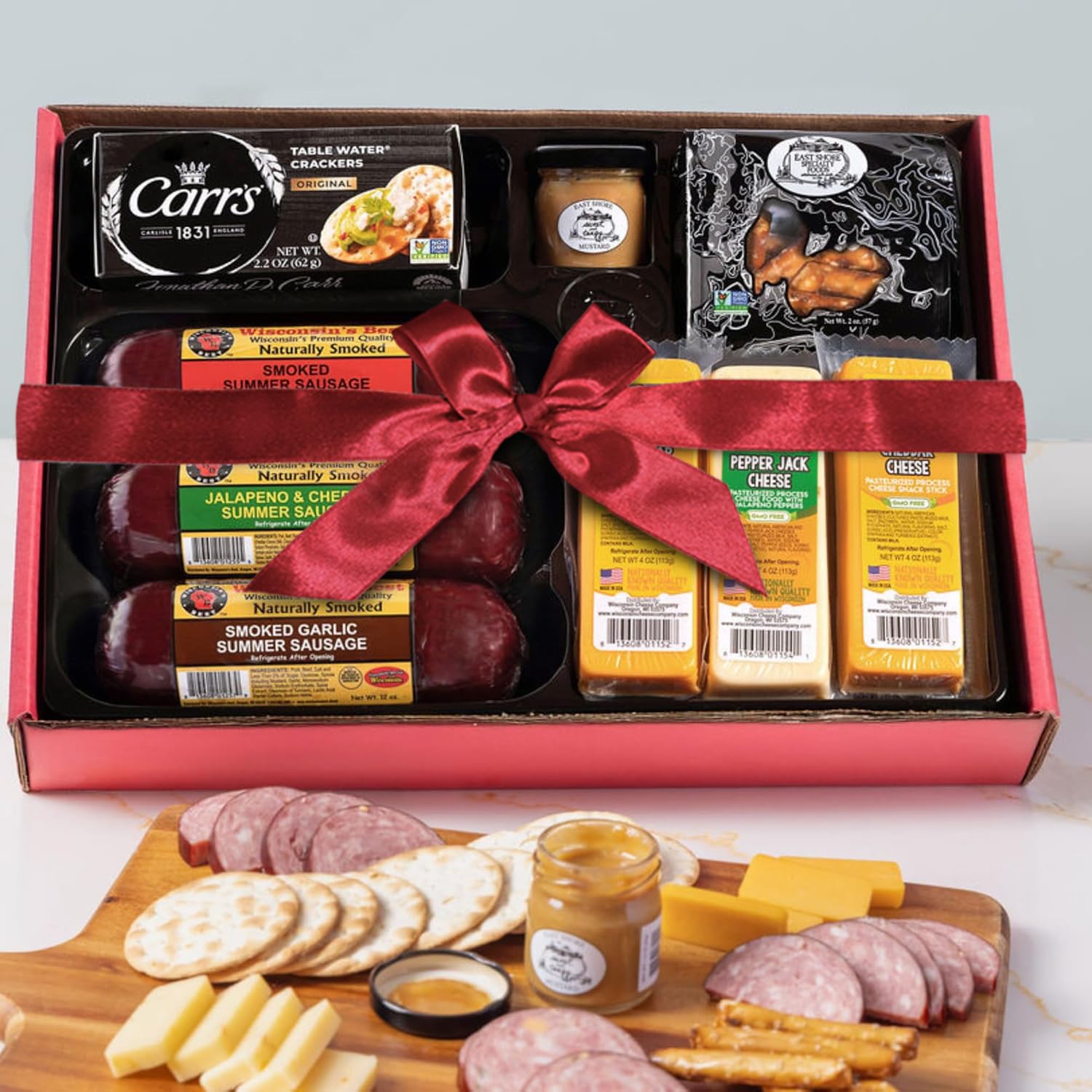
Wisconsin
$74.99
In stock on Amazon
Check price on AmazonThe Office Event or Client Gift Program: Large-to-Grand Tier
Best for: Fifteen to twenty-five people at an office event, or corporate gift sends at ten-plus units.
For 15–25 people where cheese is one component of a spread, a grand-tier box in the 5–7 lb range works if the accompaniments are robust. For pure cheese volume at scale, many office buyers end up ordering two medium boxes rather than one large box — partly because two boxes present better on a table, and partly because having two separate setups prevents bottlenecking around a single board. Food & Wine’s gift-box coverage notes this two-box strategy as a recurring preference among buyers sourcing for workplace events.
At volume — ten or more units for a client gifting program — buyers should look beyond single-unit gift box retailers entirely. Wisconsin creameries and specialty food distributors sometimes offer volume pricing or custom branding at twelve-plus units; a direct inquiry is worth the five-minute email.
Shipping note: Boxes above 5 lbs often incur freight surcharges, and expedited cold-pack shipping — typically required for anything with semi-soft cheese — can add $15–$30 to the total. Factor that into your per-person cost before committing. At this tier, the cost-per-person math matters as much as the aesthetic.
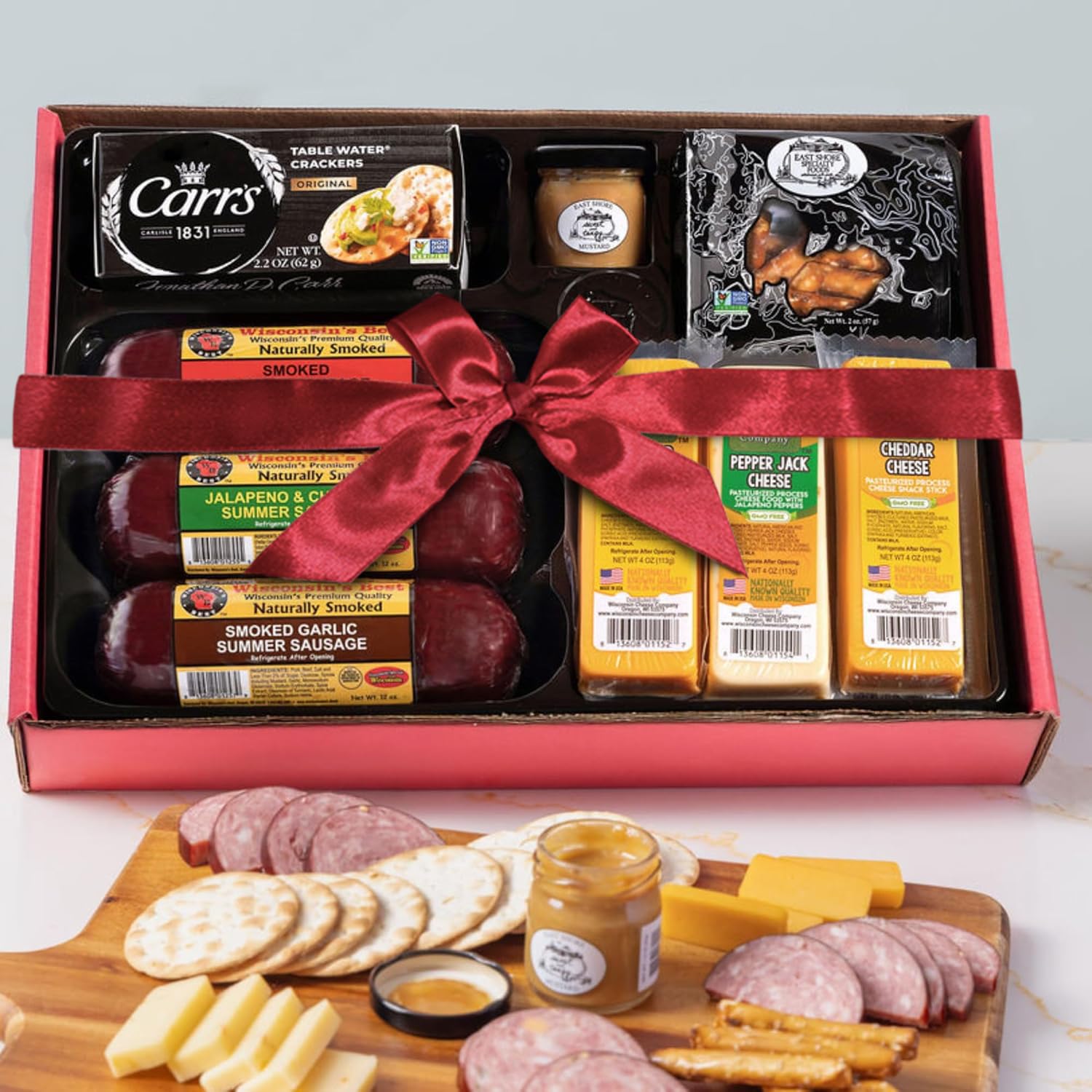
Wisconsin
$74.99
In stock on Amazon
Check price on AmazonRed Flags to Filter Out Before You Buy
Based on patterns across editorial roundups from Food & Wine, Tasting Table, and The Spruce Eats, these are the signals that a Wisconsin cheese gift box is likely to disappoint:
- No producer name or creamery origin listed. Generic “Wisconsin cheese” without a named source is almost always commodity cheese repackaged with premium-looking labels.
- “Up to X varieties” language. This wording means contents vary by availability, and the box you receive may not match what you saw in the product photo.
- Shipping from a non-refrigerated warehouse. Hard aged cheeses can technically survive ambient shipping, but semi-soft or flavored varieties with dairy inclusions — cream cheese spreads, for example — should not ship without cold packs.
- No return or replacement policy for spoiled items. Reputable producers stand behind perishable shipments. If a policy isn’t clearly stated, assume it doesn’t exist.
- Dietary restriction blind spots. “Wisconsin cheese” carries no inherent gluten-free or allergen certification. Many jalapeño, beer-cheese, and flavored-variety blends contain gluten-bearing additives. Verify the itemized ingredient list before buying for anyone with dietary restrictions.
The Decision Rule
If you’re gifting one to two people and the goal is discovery, buy the sampler tier ($25–$40), prioritize named-variety transparency over weight, and choose aged or smoked cheeses for shelf-life safety.
If you’re feeding four to eight people and the cheese board is the main event, buy the large or deluxe tier (3–4 lb total, $65–$85), confirm actual cheese weight is at least 2 lbs, and look for an anchor block plus supporting varieties.
If you’re running an office event or client gifting program at ten-plus units, skip single-unit gift box retailers. Contact creamery-direct or specialty food distributors for volume pricing, and consider ordering two medium boxes per table rather than one large.
The Wisconsin cheese gift box market is mature and well-supplied. The only real mistake is buying on aesthetics or total weight without doing the 90-second math check on actual cheese content and per-person coverage. Run those numbers first, and the rest of the decision is mostly about budget and occasion fit.