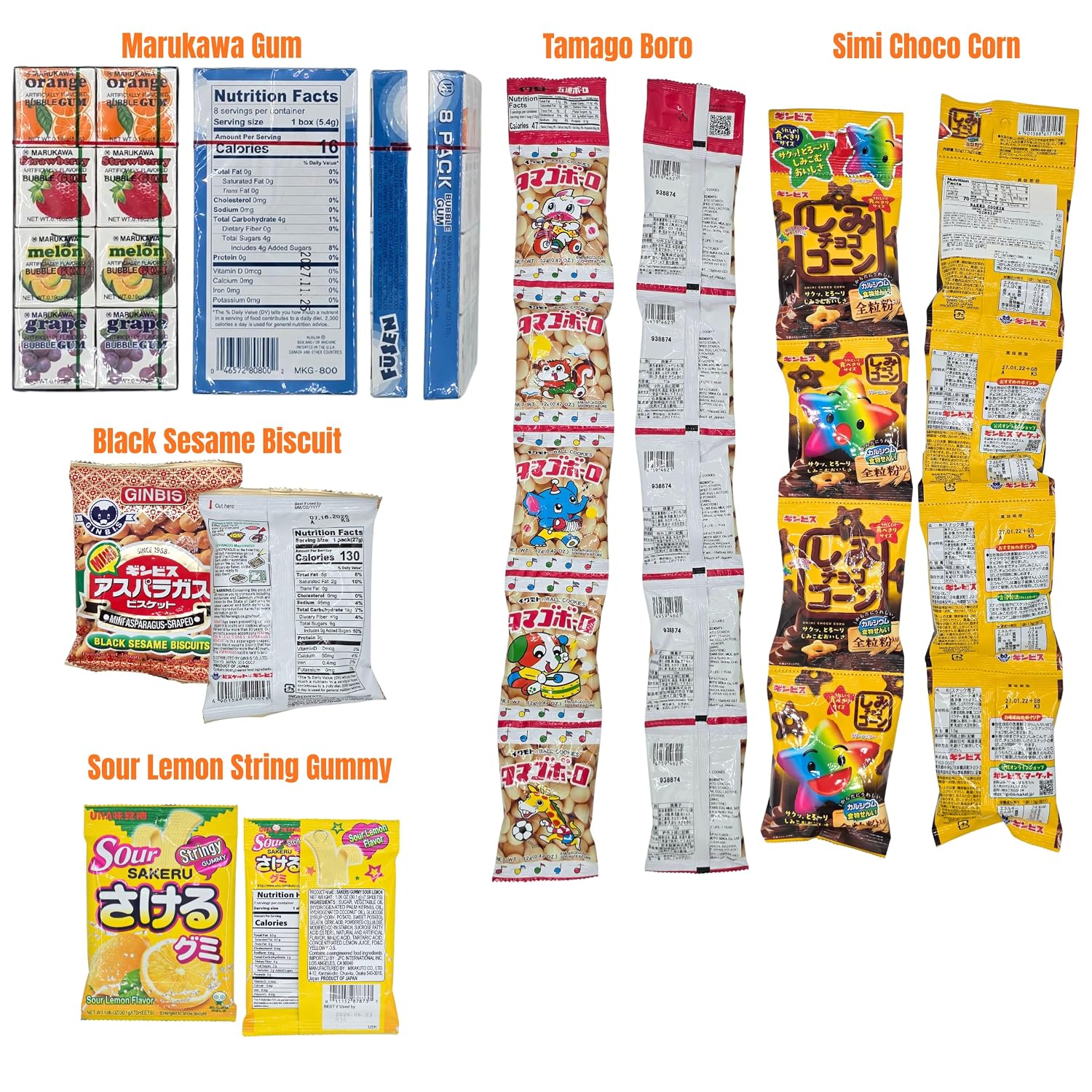
If someone handed you a bag of Pocky at the office last year and it lit up something you didn’t know you were missing — you’re not alone, and you’re also not done. Pocky (the chocolate-dipped biscuit stick you’ve seen at every checkout counter) is genuinely great, but it’s roughly the first chapter of a very long book. Japanese and Korean snack culture runs deep: regional rice crackers, mochi filled with unexpected things, spicy-sweet seaweed, yuzu-flavored candies, honey-butter chips that routinely sell out in Seoul. A snack subscription box — a curated monthly shipment of snacks, usually 10–20 items, assembled and shipped directly to your door — is currently the most efficient way to explore that depth without building a separate import habit. This guide is for people who’ve already tried one box, or who are deciding between two, and need cleaner criteria to spend $30–$60/month well.
What You’re Actually Choosing Between (The Real Decision Frame)
When subscribers and gift-buyers compare boxes like Bokksu, Sakuraco, and Snack Fever, the surface question is “which one has better snacks?” The real question is usually one of three things:
- Curation depth vs. brand familiarity — Do you want items you could theoretically find at a well-stocked H Mart, or do you want things that exist only in that box?
- Korea-specific vs. Japan-specific vs. blended — Many boxes blend both, which sounds appealing but can dilute the cultural coherence that makes these boxes worth it.
- Per-item unit economics — A box that costs $45 and contains 20 items at $2.25 average per item is a different value proposition than a $55 box with 12 items at $4.58 average, even if the latter items are arguably more premium.
Let’s work through each major option on those axes.
The Main Contenders, Compared Honestly
Bokksu (Japan-focused, premium positioning)
Bokksu is the most cited Japanese snack box in roundups by Saveur and The Spruce Eats, and for good reason: it skews hard toward artisan and regional producers, meaning a meaningful percentage of items are things that are genuinely difficult to source outside Japan. The Classic plan (as of 2026 pricing) runs approximately $49–$52/month on a month-to-month basis, dropping closer to $42–$44/month on an annual subscription — per Bokksu’s published subscription plan pricing.
The box typically includes 20–25 items plus a culture guide booklet. That puts the monthly per-item cost around $2.00–$2.50, which is defensible for the sourcing level. Subscribers in aggregated review threads consistently highlight the “can’t find this anywhere else” factor as the primary reason they stick.
The tradeoff: Bokksu leans sweet. If your preference runs savory or you’re hoping for a 50/50 split, the ratio can feel off. The box also skews toward individually-portioned wagashi (traditional Japanese sweets) and dagashi (nostalgic small-format candy), which is culturally coherent but may not match every palate.
If you’re buying as a gift: The included culture booklet earns its keep here — it contextualizes what you’re eating in a way that makes the gift feel educational without being condescending. For a recipient who’s curious but not a Japan specialist, this is a meaningful differentiator.
Sakuraco (Japan-focused, traditional-culture angle)
Sakuraco operates a similar model to Bokksu but with an explicit editorial commitment to traditional Japanese confectionery — think items tied to seasonal festivals, regional craft producers, and historical snack forms. The Spruce Eats’ buyer’s guide notes Sakuraco’s stronger emphasis on wagashi compared to Bokksu’s broader mix.
Pricing sits around $37–$42/month month-to-month, with the box typically containing 20 items. Per-item math lands near $1.85–$2.10. That’s competitive, especially given the sourcing story.
The tradeoff: Because the curation is so deliberately traditional, you will regularly receive items that are an acquired taste — certain mochi textures, bean-paste-forward sweets, or flavors built around ingredients (like matcha or black sesame) that not every recipient will love. Sakuraco works brilliantly for someone who actively wants to go deep on Japanese food culture. It’s a harder gift for someone whose snack vocabulary is still mostly Western.
Cancellation ease: Both Bokksu and Sakuraco offer straightforward online cancellation — no phone call required, no retention gauntlet. This matters for gift subscriptions you may want to end after 3 months.
Snack Fever (Korea-focused, flavor-forward)
Snack Fever fills the Korea-specialist gap that most blended boxes don’t address well. The editorial at Eater’s subscription box roundup flags Snack Fever as the cleaner choice for subscribers specifically interested in Korean convenience-store culture — the honey-butter chip phenomenon, spicy tteokbokki-flavored snacks, seaweed varieties, and the kind of snacks that trend on Korean food social media before they reach U.S. import shelves.
Pricing runs approximately $30–$38/month, with item counts in the 10–15 range. Per-item cost: roughly $2.50–$3.00, on the higher end — but Korea-specific items that are trending domestically often command that premium in import contexts.
The tradeoff: The box is less pedagogical than Bokksu or Sakuraco. There’s no culture guide. If you’re buying for yourself and you just want to eat interesting Korean snacks, that’s fine. If you’re buying as a gift for someone who’d appreciate context, the unboxing experience is less polished.
Universal Yums and SnackCrate (Blended, Gateway Tier)
Universal Yums and SnackCrate both offer country-themed rotating boxes that may feature Japan or Korea as a “featured country” in a given month — but they’re not Japan/Korea specialists. Per The Spruce Eats’ comparative overview, these boxes skew toward globally familiar versions of regional snacks (think: chocolate-dipped versions of local cookies rather than the actual street-market item). For someone new to import snacking, they’re a reasonable first step. For the reader who is already past Pocky and wants to go deeper, they are not the right answer.
By the Numbers
| Box | Monthly Cost (M2M) | Est. Item Count | Per-Item Cost | Korea or Japan Focus |
|---|---|---|---|---|
| Bokksu Classic | ~$49–$52 | 20–25 | ~$2.10–$2.50 | Japan (artisan) |
| Sakuraco | ~$37–$42 | ~20 | ~$1.85–$2.10 | Japan (traditional) |
| Snack Fever | ~$30–$38 | 10–15 | ~$2.50–$3.00 | Korea (trend-forward) |
| Universal Yums Yum Yum | ~$14–$17 | ~7–10 | ~$1.70–$2.00 | Rotating, blended |
Pricing based on published rates as of May 2026; annual plan discounts not reflected above.
The Gift-Buyer Angle: What De-Risks the Purchase
If you’re buying one of these as a gift — a common use case for all three premium boxes — there are three practical variables worth locking down before you click checkout.
Shelf life: Artisan Japanese sweets and Korean rice-based snacks typically carry 2–6 month shelf lives from production date. Bokksu and Sakuraco both note on their product information pages that items are sourced and shipped to arrive with adequate shelf life, but gifts that sit in a closet before being opened can lose margin quickly. If your recipient might not open the box immediately, a blended snack box with longer-shelf-life items (nuts, dried fruit, jerky-adjacent items) may be a safer structural choice.
Dietary considerations: Neither Bokksu nor Sakuraco reliably accommodates nut allergies, vegan diets, or gluten-free requirements at the box level. Japan Centre’s editorial sourcing notes emphasize that many traditional Japanese confections contain wheat, eggs, or dairy as structural ingredients — not incidental additives. If the recipient has a certified dietary restriction, individual curated ordering from a retailer like Bokksu Market (their à la carte store) or Japan Centre is safer than the subscription box format.
Shipping and temperature: Premium mochi and chocolate-enrobed items can struggle in summer shipping windows. Both Bokksu and Sakuraco include some temperature-sensitive items in warmer months, and reviewers consistently flag this as the primary complaint in summer shipments. If you’re gifting in June through August, confirm the current seasonal packaging policy before subscribing.
The Office Buyer’s Consideration
For HR buyers or office managers purchasing these boxes as team perks or client gifts, the single-subscription model quickly becomes the wrong vehicle. A better approach: Bokksu Market or Japan Centre for bulk à la carte orders, where you can select items by flavor profile and dietary flag, control per-unit cost precisely, and avoid the subscription infrastructure. Japan Centre’s editorial curation notes describe their selection methodology as prioritizing producer relationships and regional authenticity — which translates to a credible gifting story you can actually explain to a client.
At $150–$300 order sizes, the per-unit math on individual specialty items (typically $4–$12 per package) gives you more control than a box subscription that’s designed around a single recipient.
The “If X, Then Y” Decision Rules
You don’t need to read all of this twice. Here’s the compressed version:
-
If you want Japan-specific artisan depth and you’re willing to pay $49/month: Bokksu Classic is the defensible answer. The sourcing story and culture guide justify the price point for both personal use and gifting.
-
If you want Japan-specific but the $49 price point creates friction: Sakuraco at $37–$42 delivers comparable sourcing depth with a stronger traditional-sweets emphasis. The per-item cost is slightly better; the palate requirement is slightly higher.
-
If Korea is the specific interest: Snack Fever is the specialist answer. Don’t try to approximate it with a blended box — the curation won’t get you there.
-
If you’re gifting to someone whose snack palate you don’t know well: Start with a 3-month prepaid Bokksu gift subscription. It has the most accessible flavor range, the best unboxing presentation, and easy non-renewal. The culture guide makes the gift legible even to a recipient who doesn’t know what they’re receiving.
-
If you’re an office buyer or managing a recurring gift program: Skip the subscription model entirely. Use Bokksu Market or Japan Centre for à la carte ordering. You’ll have better cost control, dietary flexibility, and no cancellation logistics to manage.
-
If you’re still calibrating what you actually like: One month of Bokksu before committing to an annual plan. The month-to-month premium is real (~15–20%) but small against the cost of 11 more boxes of something that doesn’t fit your palate.
The snack world past Pocky is genuinely worth exploring. The boxes above are the most reliable infrastructure for doing it without spending money on trial and error. Pick the one that matches your actual constraints — not the one with the most enthusiastic marketing language — and go from there.