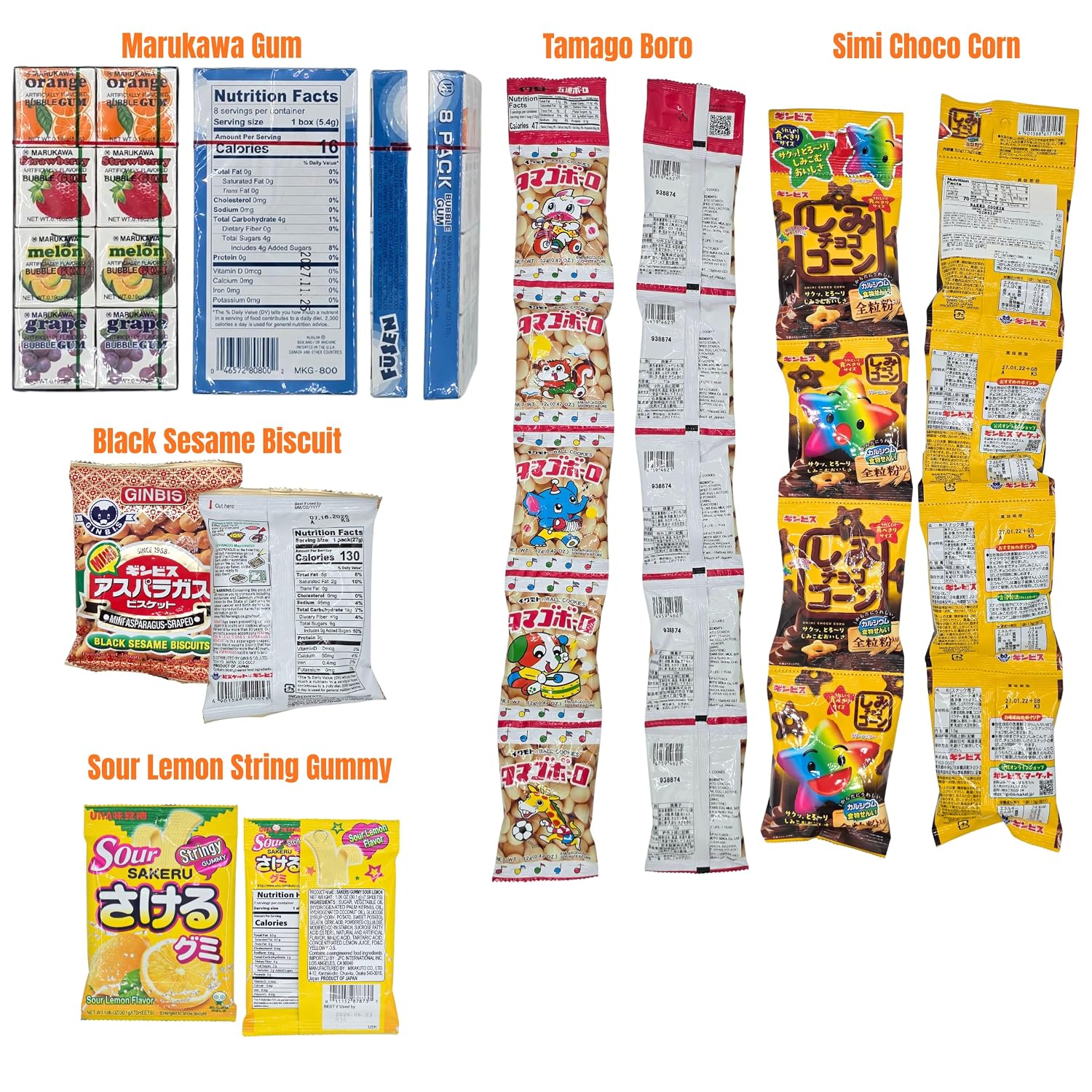
You don’t have to sign up for anything to get a great international snack box. Most of the big-name services — the ones you’ve seen reviewed on gift guides and recommendation lists — will sell you a single box, no recurring charge, no account to cancel. That’s the “one-time purchase” option, and it’s how a lot of people should be buying these boxes for the first time. But here’s the part most gift guides skip: the per-snack cost varies wildly across these boxes, and the sticker price tells you almost nothing about which one delivers the most value. A $30 box with 8 snacks is a fundamentally different deal than a $40 box with 20 snacks — and once you do the math, some of the most popular brands look a lot less competitive. This guide runs the numbers on four leading international snack box options available as one-time purchases in May 2026, names the tradeoffs clearly, and ends with a decision rule you can actually use.
| EDITOR'S PICK[SNACKZON – Mega Variety Pack of…](https://www.amazon.com/dp/B0GNJB3344?tag=greenflower20-20) | Mid-tierExotic Snacks | Budget pick[Elite World Snack Sampler Box -…](https://www.amazon.com/dp/B07BXBQ38C?tag=greenflower20-20) | |
|---|---|---|---|
| Snack count | — | — | 30+ |
| Region focus | Japan & Korea | Worldwide | Worldwide |
| Care package | ✓ | — | — |
| Gift tag | ✓ | — | ✓ |
| Ramen included | ✓ | — | — |
| Price | $64.98 | $39.95 | $32.99 |
| See on Amazon → | See on Amazon → | See on Amazon → |
Why Cost Per Snack Is the Right Unit of Analysis
The snack box market has a packaging problem: premium-looking boxes routinely use oversized inserts, shredded paper fill, and large dividers to make a modest snack count feel substantial. Eater’s overview of the best snack subscription boxes calls this out directly, noting that “presentation can obscure value” in the international snack category, where cultural novelty drives excitement but unit counts often disappoint.
Cost per snack — total box price divided by the number of individually distinct snack items — cuts through the noise. It’s not a perfect metric (a 40g full-size bag of Korean seaweed chips is not the same “snack” as a 5g sample packet), but it’s the most honest first-order comparison available. For intermediate buyers who’ve already bought one or two boxes and felt the vague sense that something didn’t add up, this is the number worth tracking.
Two additional variables matter alongside raw cost per snack:
Snack size and type mix. A box heavy on small hard candies and individually wrapped mints will have a high snack count but low caloric and experiential density. Boxes built around full-size chips, crackers, and chocolate bars — even with a lower item count — tend to deliver more memorable tasting moments.
Country depth vs. country breadth. Some boxes go deep on a single country (Japan, Korea, a rotating monthly feature nation). Others pull from 6–10 countries in a single box. Neither is inherently better, but they serve different buyer needs: depth for origin-obsessed explorers, breadth for office snack trays and gift recipients who aren’t committed to a regional palate.
The Cost-Per-Snack Breakdown: Four Boxes Compared
All prices reflect one-time (non-subscription) purchase pricing as of May 2026. Snack counts are based on published box contents from each brand’s own product listings. Where brands publish a range (“15–20 snacks”), the conservative floor is used for cost-per-snack calculation.
By the Numbers
| Box | One-Time Price | Snack Count | Cost Per Snack | Country Focus |
|---|---|---|---|---|
| Bokksu Tasting Box (Standard) | $49.00 | 20–25 items | ~$2.00–$2.45 | Japan (deep) |
| Universal Yums Yum Yum Box | $40.00 | 15–20 items | ~$2.00–$2.67 | Single rotating country |
| SnackCrate Premium Box | $40.00 | 15–18 items | ~$2.22–$2.67 | Single rotating country |
| Mouth.com Curated Gift Box | $55.00–$65.00 | 8–12 items | ~$4.58–$8.13 | US indie makers, mixed |
Sources: Bokksu.com product pages; UniversalYums.com FAQ and gift box listings; SnackCrate.com one-time box pricing; Mouth.com curated gift box listings — all reviewed May 2026.
The Mouth.com number stands out and deserves context: Mouth specializes in indie American food makers, so you’re not strictly getting an “international” box — you’re getting artisan-tier domestic products with a $5–$8 per-item price point that reflects maker scale and ingredient quality. If you’re comparing Mouth against Bokksu on cost per snack, you’re comparing apples to shiitake mushrooms. Mouth belongs in a different conversation (covered in our artisan gift box guide).
What the Math Actually Tells You
Bokksu wins on volume and per-unit cost for Japan-focused buyers. At roughly $2.00–$2.45 per snack, Bokksu’s standard one-time box delivers the best raw unit economics of the four. More importantly, Bokksu publishes detailed item-by-item descriptions and cultural context cards with each box — a detail that Wirecutter’s gift guide coverage of subscription snack boxes specifically highlights as differentiating for recipients who want to understand what they’re eating, not just taste it. The tradeoff: you’re locked into Japan. If your recipient doesn’t have a particular affinity for Japanese flavors (matcha, yuzu, mochi, rice crackers), the cultural depth becomes a liability rather than an asset.
Universal Yums and SnackCrate are near-equivalent on price math, but differ on experience design. Both land in the $2.00–$2.67 per-snack range for their one-time boxes. The meaningful difference isn’t price — it’s the snack selection philosophy. Universal Yums builds its boxes around a monthly feature country, with a printed trivia booklet and cultural context included. SnackCrate skews toward more mainstream, mass-market snack brands from the featured country — think the snacks you’d actually find at a convenience store in that country rather than regional artisan picks. Neither approach is wrong; the question is whether your buyer or recipient cares about authenticity and obscurity, or just wants fun and novelty.
For office pantry buyers assembling a snack tray for a team: SnackCrate’s familiar-adjacent flavor profiles tend to generate broader acceptance. For a gift to a food-curious friend: Universal Yums’ cultural framing gives the experience more conversational texture.
The size-mix caveat is real. Across aggregated reviews on both brands’ social proof pages and third-party commentary from Eater, reviewers consistently note that both Universal Yums and SnackCrate boxes include a handful of very small items (single-serve gummies, small hard candy portions) that inflate snack count without meaningfully contributing to the tasting experience. A practical adjustment: when evaluating a specific box’s snack count, mentally subtract any items under 15g from your “real snack” count and recalculate. The numbers shift by $0.25–$0.75 per snack but the relative ranking holds.
The Variables That Change the Ranking
Three factors can flip your optimal choice depending on your specific situation:
1. Gift vs. self-purchase. If this is a gift, presentation quality and cultural storytelling matter more than raw cost efficiency. Bokksu’s booklet-and-tissue-paper presentation is consistently called out in reviewer write-ups as “gift-ready out of the box.” Universal Yums’ trivia booklet serves a similar function. SnackCrate’s packaging is more utilitarian. If you’re buying for yourself and just want volume of new snacks to try, SnackCrate’s practical format is fine.
2. Dietary restrictions. None of these boxes are reliably certified gluten-free or allergen-controlled. Bokksu publishes ingredient lists in English for all items — an operational advantage if you’re screening for a recipient with sensitivities. Universal Yums and SnackCrate publish ingredient information but it’s harder to access pre-purchase. This matters especially for international products, where domestic allergen-labeling conventions don’t apply and cross-contamination disclosures vary significantly. If dietary restrictions are in play, Bokksu’s transparency is the deciding factor, full stop.
3. Frequency of purchase. This is a one-time box guide, but here’s the honest math: all three of the international-focused brands (Bokksu, Universal Yums, SnackCrate) offer subscription discounts of 10–20% off the one-time price. If you’re planning to buy three or more boxes over the next year, the cost-per-snack math shifts meaningfully in favor of subscribing — and all three brands offer month-to-month cancellation. Bokksu’s published cancellation policy (cancel anytime before the monthly billing date) and Universal Yums’ FAQ both confirm no long-term commitment is required for the base subscription tier. At three or more purchases annually, subscription pricing closes the gap with Bokksu’s one-time cost advantage and makes it a clearer choice across the board.
Decision Rule: If X, Then Y
Here’s the framework for making the call without second-guessing it:
If you want the best cost-per-snack and Japan specifically appeals to the recipient → Bokksu Standard, one-time purchase. It wins on unit economics, presentation, and ingredient transparency.
If you want country variety and a cultural experience for a general-audience gift → Universal Yums Yum Yum Box. The trivia booklet earns its keep as a conversation starter and makes the box feel considered, not just grabbed.
If you’re buying for an office tray or a large group with mixed palates → SnackCrate Premium. The familiar-leaning flavor profile maximizes acceptance across a crowd. Buy two for meaningful coverage.
If you’re buying more than three boxes this year → Evaluate subscription pricing across all three. At that volume, subscription math wins regardless of brand preference, and cancellation risk is low given all three brands’ stated month-to-month policies.
If artisan quality matters more than volume → Mouth.com, with full awareness that your cost-per-snack will be 2–4x higher and you’re buying into US indie makers, not international provenance.
The on-ramp guide that contextualizes all of these brands for first-time buyers — including what makes a snack box “international” vs. “artisan” vs. “regional” — is linked in our foundational snack box primer. If the vocabulary in this article felt immediately familiar, you’re in the right place. If any of it felt like a jump, start there and come back.
Pricing and box contents reflect published listings as of May 2026 and are subject to change. Always verify snack counts and one-time purchase availability directly with the retailer before buying.