If you’ve ever stood in a department store checkout line in November, or scrolled through a company gifting portal at midnight, you’ve almost certainly encountered Harry & David and Hickory Farms. Both brands sell what the industry calls gift baskets — curated sets of shelf-stable and semi-perishable food items packaged together and shipped directly to a recipient. Think smoked sausages, cheese rounds, crackers, preserves, and dried fruit, all bundled into a decorative box or wicker basket. The pitch is simple: someone else handles the curation, the packaging, and the shipping, so you don’t have to. But “gift basket” is a broad tent. A $29 Hickory Farms Farmhouse Collection and a $99 Harry & David Royal Riviera Tower are technically both gift baskets — and making the wrong call between them can mean a disappointed client, a wasted budget, or a package that arrives looking like it lost a fight with a mail truck. This guide breaks down exactly where each brand earns its price tag, where it falls short, and how to match the right brand to your specific situation.
What You’re Actually Comparing: Products, Price Bands, and the Gaps Between Them
Before running a side-by-side, it helps to understand that these two brands occupy different parts of the same market — and only partially overlap.
Harry & David is a Medford, Oregon company founded in 1934, originally known for its Royal Riviera pears. Today it operates under the 1-800-Flowers parent umbrella and positions itself in the $40–$150+ gift range. The brand’s identity is tied to fruit-forward gifting — those pears are genuinely famous — alongside gourmet preserves, Moose Munch popcorn, and premium chocolate assortments. Reviewers at Tasting Table, in their Harry & David gift basket coverage, consistently describe the unboxing experience as elevated, noting that the presentation quality — tissue paper, ribbon wrapping, branded boxes — is noticeably above mass-market competitors. Food & Wine, in their “Best Gift Baskets of 2025” feature, called out Harry & David’s tower boxes specifically for their shelf appeal and perceived value relative to their $60–$130 price band.
Hickory Farms is a Toledo, Ohio brand dating to 1951, built almost entirely around the smoked sausage-and-cheese format. Its price range is lower — most core sets fall between $20–$70 — and it distributes heavily through grocery stores, club stores, and online retailers in addition to its direct website. The Spruce Eats, in their roundup of best food gift baskets, notes that Hickory Farms excels at delivering crowd-pleasing, reliably familiar flavors and that its Farmhouse and Signature collections represent strong value at the $25–$45 mark. The brand’s sweet spot is recipients who want savory, substantial snacking rather than something that feels ceremonial.
The Numbers Side-by-Side
| Category | Harry & David | Hickory Farms |
|---|---|---|
| Entry-tier price | ~$40 | ~$20 |
| Mid-tier sweet spot | $60–$85 | $35–$55 |
| Premium ceiling | $150–$200+ | $75–$90 |
| Perishables included? | Yes (fresh pears, some cheeses) | Mostly shelf-stable; some refrigerated sets |
| Shelf life of core items | 3–7 days (fruit), 30–90 days (pantry items) | 60–180 days (sausage/cheese shelf-stable) |
| Packaging quality | High — branded, giftable | Moderate — functional, sometimes plastic-forward |
| Retail channel presence | Primarily direct + department stores | Grocery, club stores, online direct |
Brand-by-Brand Breakdown
Harry & David: Where It Earns the Premium
Harry & David’s core value proposition is presentation and perishable fruit quality. If you’re sending a gift that needs to look like a gift — a client thank-you, a sympathy basket, something going to someone’s home address where the unboxing is part of the experience — Harry & David consistently earns its premium. Wirecutter, in their “Best Food Gifts” guide, has noted that the brand’s tower sets deliver on presentation in a way that feels proportionate to a $70–$100 spend.
The pears are the real thing. Across aggregated review patterns from sources including Tasting Table and Food & Wine, recipients consistently mention the fruit as the standout item — genuinely different from grocery-store alternatives, noticeably richer in flavor. If the person you’re gifting has never had a Royal Riviera pear, that experience alone can justify the premium tier over Hickory Farms at a comparable price point.
The tradeoffs you need to price in:
-
Shipping windows are tight for perishables. The fruit arrives with a 3–5 day ripening window. If your recipient travels, is hard to reach, or you’re sending to a business address with uncertain delivery timing, you’re gambling on logistics. Consumer Reports, in their holiday gift basket buying guide, specifically flags perishable-forward baskets as higher-risk for corporate gifting where delivery confirmation isn’t guaranteed.
-
The non-fruit items don’t always justify the premium. The Moose Munch popcorn is genuinely good and has a cult following. But the preserves, chocolate truffles, and crackers that fill out lower-tier baskets are pleasant but not exceptional — Tasting Table reviewers have noted that the supporting cast in the $40–$60 range can feel like padding next to the hero items.
-
Price-per-item math gets unfavorable at lower tiers. A $49 Harry & David basket might contain $15–$18 worth of fruit, a small jar of preserves, a tin of popcorn, and a cheese round. The packaging and brand premium account for the rest. That’s fine if the presentation matters. It’s a poor trade if you’re buying for a pantry-stocking situation or a group that will disassemble the basket immediately.
Harry
$143.98
In stock on Amazon
Check price on AmazonHickory Farms: Where It Wins on Value
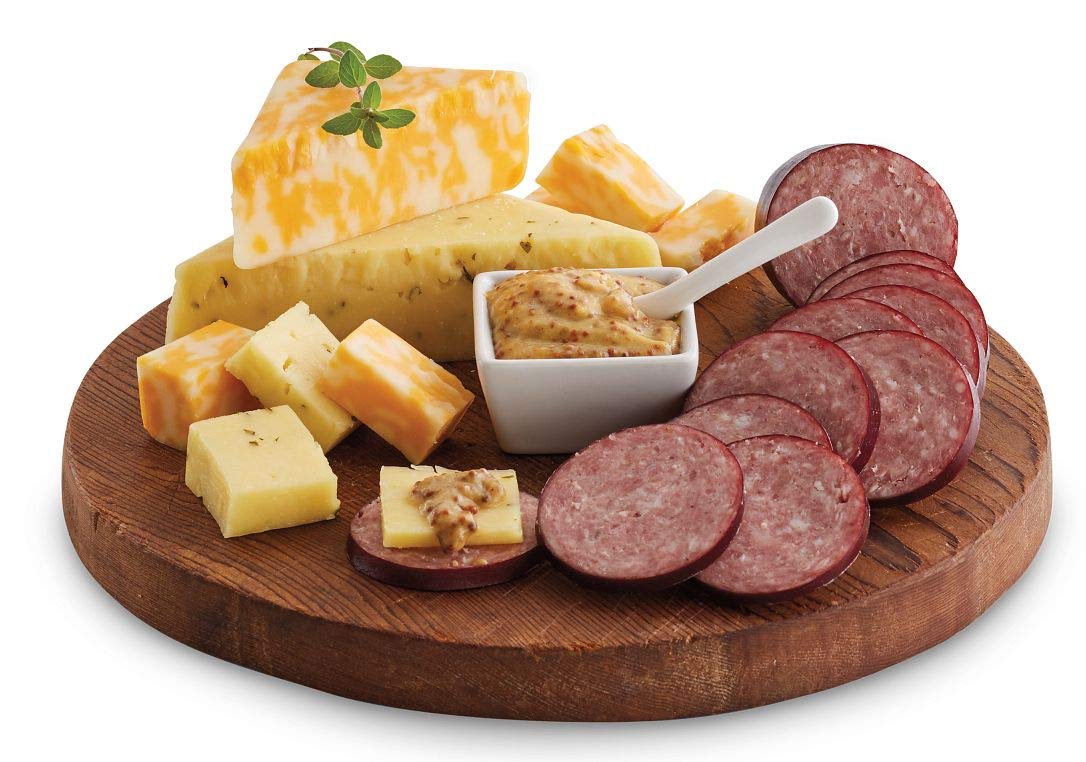
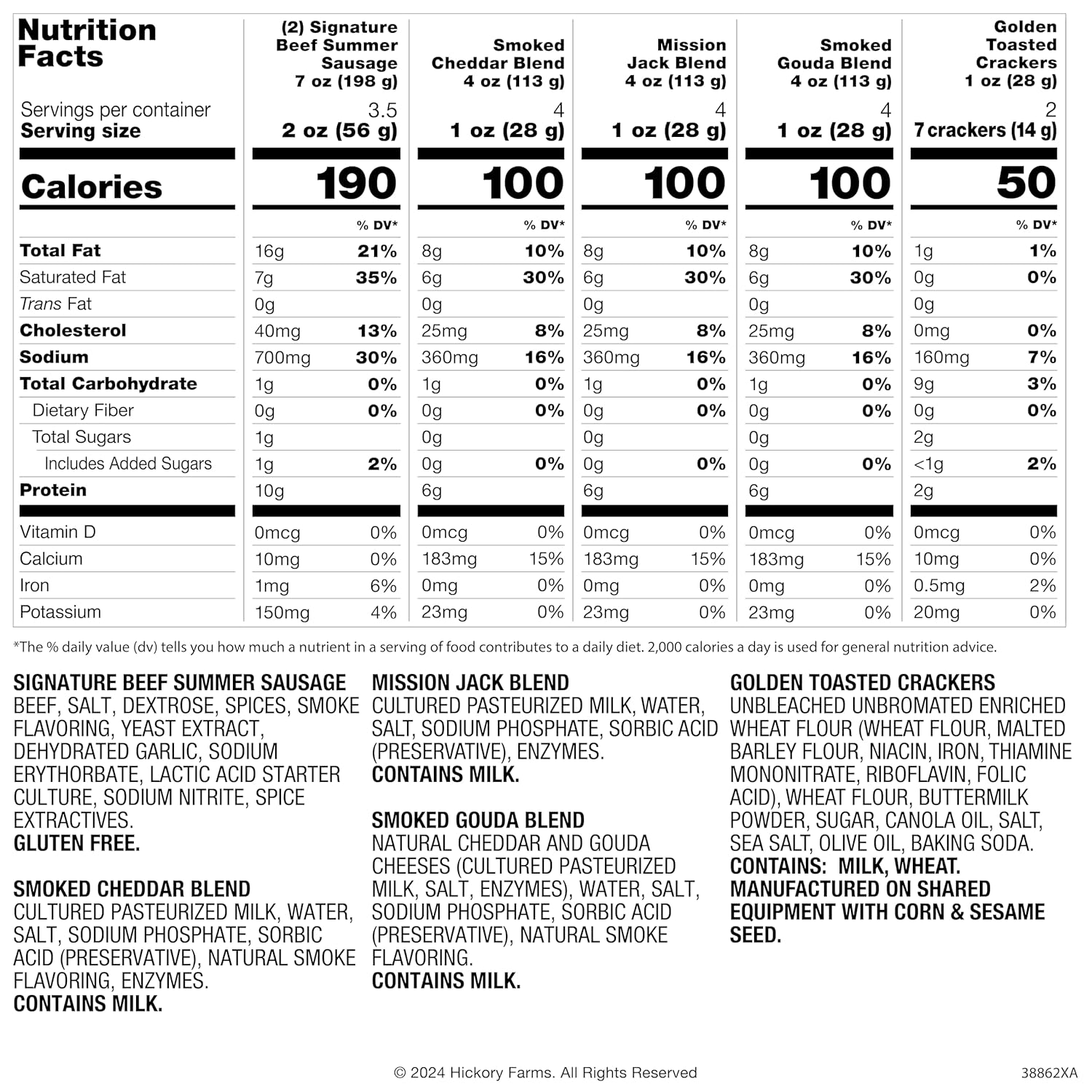
Hickory Farms is, bluntly, a better value play for savory-focused gifting in the $25–$55 range. The smoked beef summer sausage and sharp cheddar cheese rounds are the brand’s signature, and they’ve earned their reputation: shelf-stable, widely liked across age groups and dietary preferences (excepting vegetarians and those avoiding processed meat), and genuinely snackable over several weeks. For office gifting — where a basket gets picked apart over three days by a dozen people — shelf-stable durability and crowd-pleasing flavors matter more than unboxing theater.
The Spruce Eats specifically calls out Hickory Farms’ Sweet & Savory Gift Box as a strong pick for the $35–$45 range, noting it balances the sausage-and-cheese core with dried fruit and chocolate to satisfy varied preferences. For buyers assembling holiday gifts at the $30–$50 per-unit mark, this tier is where Hickory Farms’ cost-per-item math tends to favor real product over packaging cost.
Where it falls short:
-
Presentation is functional, not festive. If the recipient will see the box before it’s opened, Hickory Farms’ packaging — often a cardboard tray with cellophane wrap or a basic holiday tin — reads as utilitarian. It’s not embarrassing, but it doesn’t signal “I went out of my way for you.” For client gifts or anything where the gesture matters as much as the contents, this is a real gap.
-
The format is narrow. Sausage-and-cheese is the whole show. There’s no fruit, no gourmet preserve narrative, no regional origin story. For recipients with vegetarian diets or those avoiding processed meat, the core product simply doesn’t work — and Hickory Farms’ alternatives in those cases are noticeably thinner.
-
Brand recognition skews older. Depending on your audience, Hickory Farms may read as a nostalgic grocery-store staple rather than a considered choice. For millennial or Gen Z recipients with premium snack literacy, the brand may not carry the same weight as a more artisan-positioned alternative.
Hickory
$44.99
In stock on Amazon
Check price on AmazonThe Budget Tier: Which Brand Delivers More Under $40
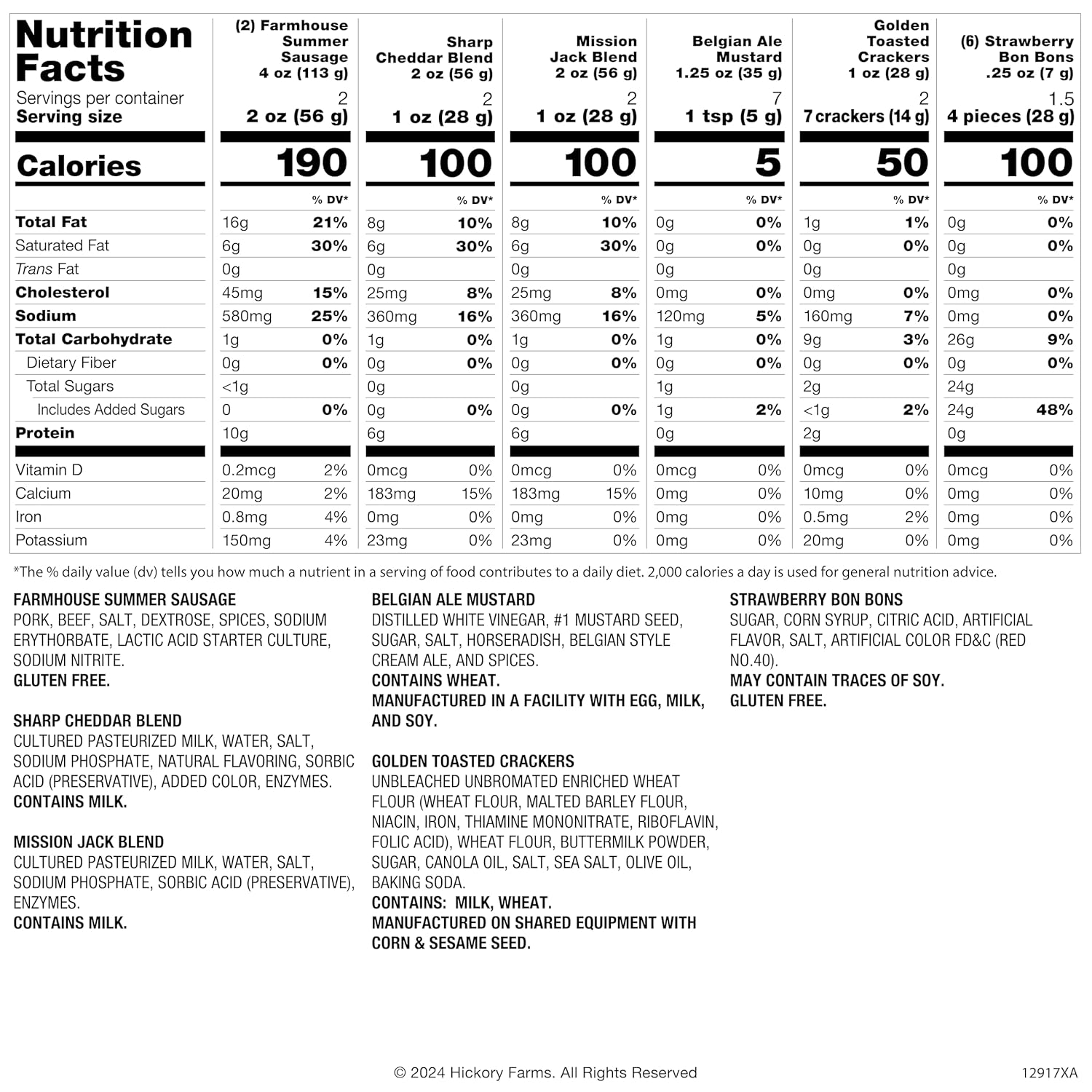
At the sub-$40 price point, the calculus shifts meaningfully. Harry & David’s entry sets in the $39–$49 range tend to feel undersized relative to the brand’s premium positioning — you’re paying for the name and the box as much as the contents. Hickory Farms’ $29–$39 range, by contrast, delivers what it promises: a credible smoked sausage, a cheese round or two, some crackers or mustard, and enough variety to feel like a genuine gift rather than a stocking stuffer. For budget-conscious buyers who still need to send something that reads as intentional, Hickory Farms wins this band outright on honest value delivery.
The exception is when the occasion demands a specific type of item — fresh fruit, a premium preserve, something that signals a culinary point of view. In those cases, it may be better to step up to Harry & David’s $55–$65 range, where the pear-forward sets start to justify their price, rather than settling for either brand’s weakest tier.
Hickory
$24.99
In stock on Amazon
Check price on AmazonThe Decision Framework: If X, Then Y
This is where practitioners tend to get tripped up — treating these brands as interchangeable when the use case should dictate the pick outright.
If you’re sending to a home address where the unboxing experience matters, budget is $60+, and perishable logistics are feasible: Harry & David is the stronger choice. The presentation earns the premium. Opt for a tower set with pears as the centerpiece and treat the rest as welcome accompaniments.
If you’re buying for an office, team, or group setting where shelf life and per-head value matter more than packaging: Hickory Farms wins at the $35–$55 range. The sausage-and-cheese format travels well, stores easily, and gets consumed without ceremony — which is exactly what office gifting requires.
If your recipient is vegetarian, pescatarian, or avoids processed meat: Neither brand is a great fit at their core. Harry & David’s fruit-forward options are the safer path, but you’d be better served looking at specialty alternatives with a clear vegetarian or cheese-focused identity. Consumer Reports’ holiday buying guide recommends explicitly confirming dietary alignment before any food gift purchase.
If budget is under $40 and presentation still matters: Hickory Farms’ mid-tier sets offer more honest value at that price than Harry & David’s entry sets. The $29–$39 Hickory Farms range delivers what it promises; the $39–$49 Harry & David range sometimes doesn’t.
If you’re buying at volume — ten or more units — for a corporate gifting program: Run the per-unit math explicitly. Hickory Farms’ shelf-stable format simplifies logistics: no refrigeration concerns, longer delivery windows, lower spoilage risk. Harry & David offers volume pricing on their website, but the perishable logistics overhead has to be factored into total cost. Consumer Reports’ holiday gift basket buying guide notes that volume buyers consistently underestimate the spoilage and redelivery costs associated with perishable baskets shipped to business addresses.
One More Thing Worth Naming
Both brands occupy what you might call the recognized-name tier of food gifting — broad distribution, household familiarity, consistent if unspectacular quality across most of their ranges. If your recipient is a genuine premium snack enthusiast — someone who reads sourcing notes and compares subscription boxes — neither Harry & David nor Hickory Farms is likely to impress at a sophisticated level. For that buyer, the spend is better directed toward something with a clearer artisan or regional identity. The foundational guide to premium gift basket sourcing on this site walks through that tier in detail.
But for the broad middle of the gifting market — clients, colleagues, family members who will genuinely appreciate a well-assembled food gift without needing it to be artisan — both brands deliver reliably. The question is simply which one you’re matching to the right moment.
Harry & David is the pick when the gesture needs to feel considered, the fruit timing works in your favor, and the budget supports the premium. Hickory Farms is the pick when practicality, shelf life, and per-unit value have to carry the day. Know your use case, and neither one will let you down.